Residue


Residue explores the relationship between armed conflict, military industrial production, and their enduring impact on humanity and ecological environments.
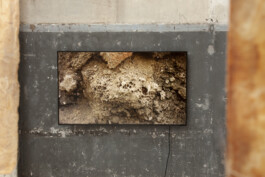
The project engages with the history of the Hembrug terrain in Zaandam, which has been home to the Netherlands’ biggest weapons factory between 1904 and 2003. It played an important role in many international conflicts, including the suppression of the independence struggles in Indonesia during the colonial wars. Currently, the area is in redevelopment in order to revive it for civilian use, but the violence that used to be exported from here has not disappeared; the soils beneath the former factory contain contaminating remnants of the weapons manufacturing. An extensive process of soil remediation tries to address this contamination. An act that represents attempts of cleansing, but can just as well be read as the covering up of an uncomfortable past.
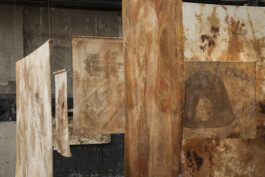
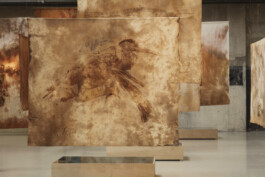
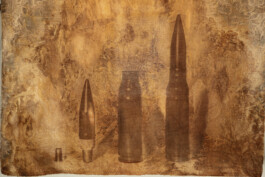
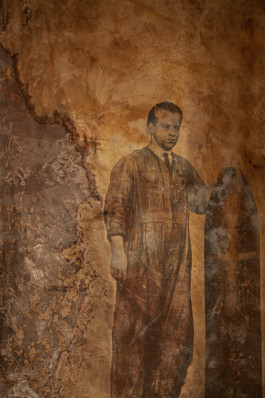
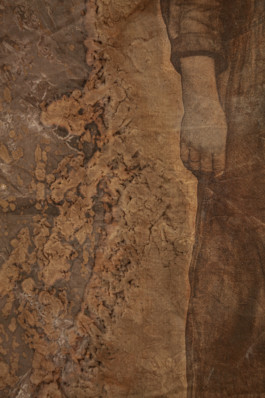
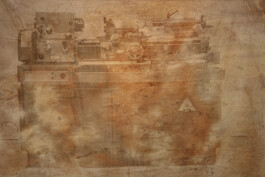
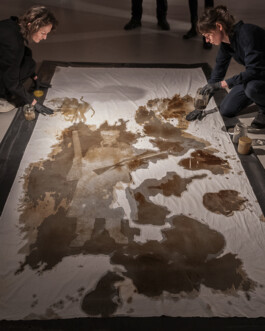
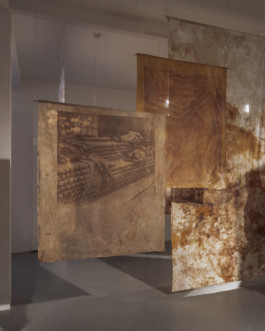
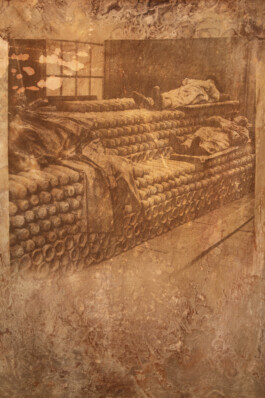
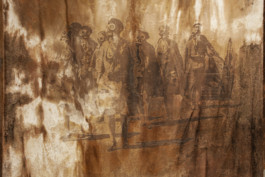
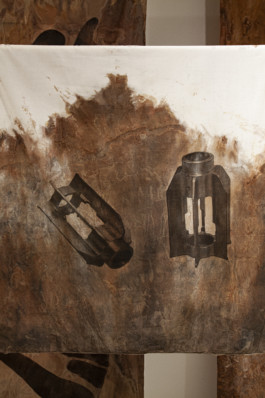
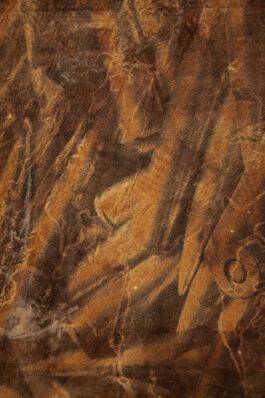
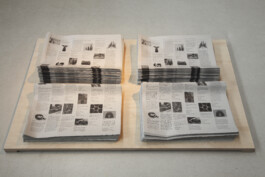
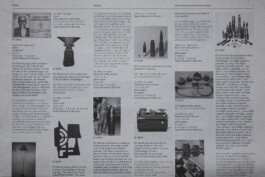
The soil of the Hembrug terrain is portrayed as a physical archive that tells its own story. A parallel investigation activates the photographic archive of the Hembrug factory by turning our attention to images that depict working conditions, advertisements, and technical documentation. A series of large textile works brings these two archives in contact through a photochemical process, called soil chromatography. The polluted soils reveal and transform archival images, both archives interact and collide with each other.
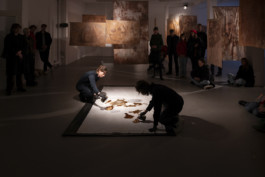
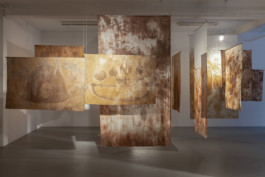
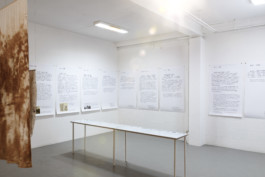
In the format of a spacial installation, these archives unfold step by step, allowing visitors to physically enter the history of the Hembrug terrain. The project has been exhibited amongst other at Amsterdam Museum, at Looiersgracht 60 in the scope of the Sonic Acts Biennial, at Willem Twee and at the Stedelijk Museum Amsterdam.


Residue


Residue explores the relationship between armed conflict, military industrial production, and their enduring impact on humanity and ecological environments.
The project engages with the history of the Hembrug terrain in Zaandam, which has been home to the Netherlands’ biggest weapons factory between 1904 and 2003. It played an important role in many international conflicts, including the suppression of the independence struggles in Indonesia during the colonial wars. Currently, the area is in redevelopment in order to revive it for civilian use, but the violence that used to be exported from here has not disappeared; the soils beneath the former factory contain contaminating remnants of the weapons manufacturing. An extensive process of soil remediation tries to address this contamination. An act that represents attempts of cleansing, but can just as well be read as the covering up of an uncomfortable past.
The soil of the Hembrug terrain is portrayed as a physical archive that tells its own story. A parallel investigation activates the photographic archive of the Hembrug factory by turning our attention to images that depict working conditions, advertisements, and technical documentation. A series of large textile works brings these two archives in contact through a photochemical process, called soil chromatography. The polluted soils reveal and transform archival images, both archives interact and collide with each other.
In the format of a spacial installation, these archives unfold step by step, allowing visitors to physically enter the history of the Hembrug terrain. The project has been exhibited amongst other at Amsterdam Museum, at Looiersgracht 60 in the scope of the Sonic Acts Biennial, at Willem Twee and at the Stedelijk Museum Amsterdam.